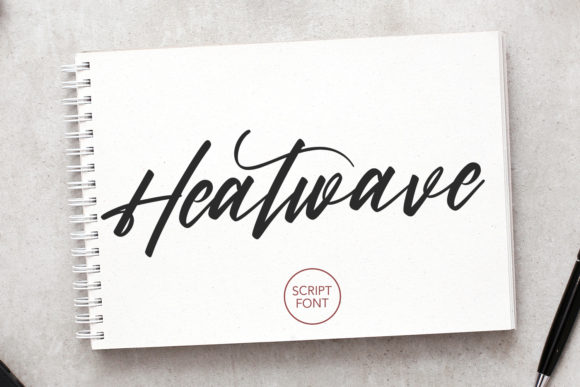
Heatwave: A Script Handwritten Font That Elevates Branding
Recently, I found myself staring at a blank brand board, the weight of a new client project pressing on my shoulders. The task was to create a cohesive identity for a boutique that wanted to feel both elegant and approachable. As I sketched out a logo concept, I knew I needed a font that could balance sophistication with warmth. That’s when I pulled out Heatwave—a Script Handwritten font that immediately felt like it had been designed for this very moment.
Heatwave for Elegant Branding and Signature Typography
Heatwave is an exquisite handwritten font that effortlessly marries classy calligraphic influences with a contemporary edge. It’s the kind of typeface that feels like it belongs in a designer’s toolkit, yet remains accessible enough for a small business owner to use confidently. When I first tested it on the boutique’s logo draft, I was struck by how it brought a sense of personality without overpowering the design.
What sets Heatwave apart is its ability to maintain legibility even in stylized forms. Unlike some script fonts that can become too ornate or difficult to read, Heatwave strikes a perfect balance between artistry and clarity. It works beautifully as a headline font, adding visual interest while still being readable at smaller sizes. This makes it ideal for branding projects where the font needs to be used across multiple touchpoints—from packaging labels to social media graphics.
Heatwave for Packaging Design and Product Labels
One of the most compelling use cases I discovered for Heatwave was in packaging design. I placed it on a mockup for a skincare product line and was immediately impressed by how it enhanced the overall aesthetic. The font’s fluid strokes and subtle flourishes gave the packaging a handcrafted feel, which aligned perfectly with the brand’s artisanal ethos.
When working on product labels, I found that Heatwave’s versatility shone through. It worked well as a primary font for short phrases and taglines, and it also paired nicely with a sans serif font for body text. This flexibility means it can be used in a variety of ways—whether as a display font, accent font, or supporting typeface—depending on the project’s needs.
However, I would caution against using Heatwave for long body text or formal corporate materials. Its decorative nature makes it more suited for logos, headlines, and short promotional copy rather than dense informational content. For those looking to use it in print-on-demand products or merchandise, it’s important to consider how it will appear at different scales and in various formats.
Heatwave for Social Media Graphics and Web Design
As I moved into creating social media assets for the boutique, I was eager to test Heatwave’s performance in digital environments. I used it for Instagram headers and Facebook banners, and it looked stunning. The font’s modern twist made it feel current and relevant, which is essential for brands trying to connect with younger audiences.
On the website, I experimented with using Heatwave in the hero section and navigation menus. It worked well as a headline font, drawing the eye without overwhelming the page. However, I noticed that at smaller sizes, the font’s intricate details could become less legible. This is something to keep in mind when designing for web platforms, especially if the font will be used in mobile layouts or responsive designs.
For web design, I recommend pairing Heatwave with a clean sans serif font to ensure readability. This combination creates a nice contrast and allows the design to breathe. It’s also worth noting that Heatwave includes webfont availability, making it easy to implement across different platforms and devices.
Heatwave for Logo Design and Brand Identity
When it came to the logo itself, Heatwave was a natural choice. Its calligraphic influences added a touch of elegance, while its contemporary feel kept it from feeling outdated. I used it as the primary typeface for the boutique’s name, and it immediately conveyed the brand’s personality—creative, refined, and approachable.
What I appreciate most about Heatwave is its adaptability. It can be used as a logo font, a display font, or even as an accent font in a larger typographic system. This makes it a valuable asset for designers who want to create a cohesive brand identity that feels both unique and versatile.
Before finalizing the design, I made sure to test Heatwave in different contexts—on a shop sign, a product mockup, and even a printed card. Each time, it performed admirably, reinforcing its value as a premium font that can elevate any branding project.
If you’re looking for a Script Handwritten font that can handle both creative and commercial applications, Heatwave is definitely worth considering. Just remember to review its licensing terms before using it in client work, especially for commercial use, packaging, or print-on-demand products.